Keynote Speakers
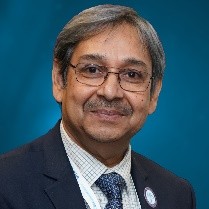
Debatosh Guha
Institute of Radio Physics and Electronics
University of Calcutta
Title of the Talk: Enjoying Scientific Challenges in Engineering Research
Abstract
Engineering research is fundamentally driven by application, development, or innovative improvement. However, a lack of precise scientific knowledge can often create bottlenecks! This talk will highlight compelling personal experiences that illustrate how consistent efforts can unveil fundamental scientific truths and lead to effective engineering solutions.
Biography
Debatosh Guha is a Professor in Radio Physics and Electronics, University of Calcutta. He is now INAE Chair Professor at same Institute and former HAL Chair Professor at IIT Khargapur. He is a Fellow of IEEE and also a fellow of all four Indian National Academies for Sciences and Engineering; recipient of Abdul Kalam Technology Innovation National Fellowship, Govt. of India (2020-2025) and also the prestigious J. C. Bose Grant, Govt. of India in 2025. He served IEEE Antennas and Propagation Society as a Distinguished Lecturer, Associate Editor of its Transactions and Journals, and at present, as the Chair of the MGA Standing Committee.
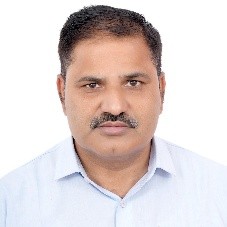
Ram Bilas Pachori
Institute Chair Professor (HAG)
Department of Electrical Engineering IIT Indore
Title of the Talk: Multichannel Brain Signal Processing and Applications
Abstract
Adaptive signal decomposition techniques have emerged as powerful tools for analyzing non-stationary and non-linear signals. This keynote will discuss the motivation behind adaptive decomposition methods such as EMD, EWT, IF, and VMD over conventional fixed-basis techniques. With advances in sensor technology enabling simultaneous acquisition of multichannel signals, the focus shifts to multivariate signal decomposition. The talk will present extensions of iterative filtering (IF) for multichannel processing and demonstrate frameworks combining multivariate IF (MIF) and machine learning for applications in brain–computer interface (BCI) and schizophrenia detection using EEG signals. Benchmark results highlight the effectiveness of the proposed methods compared to existing techniques.
Biography
Prof. Ram Bilas Pachori received his B.E. from RGPV Bhopal and M.Tech. and Ph.D. from IIT Kanpur. He is currently Institute Chair Professor (HAG) at IIT Indore and has previously served as Professor, Associate Professor, and Assistant Professor at IIT Indore, along with international research and visiting positions across France, Italy, Germany, the UK, Malta, and Malaysia. His research interests span signal and image processing, biomedical and brain signal processing, BCI, machine learning, AI, and IoT in healthcare.
Prof. Pachori has supervised 27 Ph.D. scholars, delivered 350+ invited talks, authored the textbook “Time-Frequency Analysis Techniques and their Applications” (CRC Press, 2023), and published 390+ research works with 20,500+ citations and an h-index of 79. He holds 11 patents and serves on editorial boards of leading IEEE and international journals.
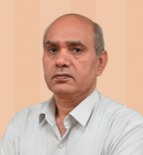
Mahesh Kumar Mishra
Professor in the Department of Electrical Engineering at the Indian Institute of Technology Madras
Title of the Talk: Power Converters for Power Quality, Microgrids, and EV Systems
Abstract
This talk will focus on the various types of power electronic converters used in power-quality enhancement, microgrid systems, and electric vehicle (EV) applications. Power converters play a critical role in the operation of these systems. Their topology, structure, power density, and efficiency significantly influence voltage and current generation, regulation, and control.
Functionally, converters are designed either to provide a desired voltage or to supply a controlled current, depending on the application. For instance, in power-quality applications, converters are used to inject a compensating series voltage or an appropriate shunt current to support the load. In microgrid systems, they facilitate the required active and reactive power flow between renewable energy sources and the grid. In electric vehicle applications, similar converters enable real-power injection for battery charging and bi-directional power exchange. When power flows from the grid to the EV, it supports charging (G2V), and when excess energy is sent back from the EV to the grid, it supports vehicle-to-grid (V2G) operation.
These interlinked functionalities and their relevance to modern power and energy systems will be explored and discussed in the presentation.
Biography
Mahesh Kumar Mishra received the B.Tech. degree in Electrical Engineering from the College of Technology, Pantnagar, India, in 1991, the M.E. degree from the University of Roorkee, Roorkee, India, in 1993, and the Ph.D. degree in Electrical Engineering from the Indian Institute of Technology Kanpur, India, in 2002. He has over 30 years of teaching and research experience. He was with the Department of Electrical Engineering at Visvesvaraya National Institute of Technology, Nagpur, India, for about ten years. He is currently a Professor in the Department of Electrical Engineering at the Indian Institute of Technology Madras, Chennai, India. His research interests include power distribution systems, power electronic applications in microgrids, and renewable energy systems.
Prof. Mahesh received the IETE Prof. Bimal Bose Award in 2015 for his outstanding contributions to power electronics applications in power systems. He is a Fellow of the Indian National Academy of Engineering and The Institution of Engineers (India). He received the IEEE PES India Narain Hingorani Award for Excellence in Custom Power Devices in 2024 and served as the Chair of the IEEE Madras Chapter during 2023–24. Prof. Mishra is the author of Power Quality in Power Distribution Systems: Concepts and Applications, published by CRC Press in 2023. He has also published a book on life experiences titled The Inner Voice in 2025. In recognition of his outstanding contributions to the design, development, and control of custom power devices and microgrid systems, Prof. Mahesh Kumar has been selected as an IEEE Fellow in year 2025.
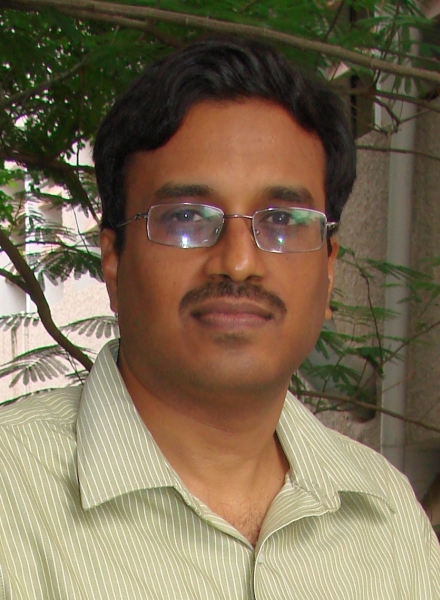
Title of the Talk: Continuous-Time Pipelined Analog-to-Digital Converters-Where Filtering Meets Analog-to-digital Conversion
Abstract
If someone told you that the power, noise, distortion, and area of an integrated mixed-signal block could be reduced simultaneously, you’d probably think this was a lie. It turns out that it is indeed possible sometimes – and this talk will present an example called the continuous-time pipeline (CTP) ADC. The CTP is an emerging technique that combines filtering with analog-to-digital conversion. After discussing the operating principles behind the CTP, we describe the fundamental benefits of the CTP over a conventional signal chain that incorporates an anti-alias filter and a Nyquist-rate converter. We will then show design details and measurement results from a 12-bit ENOB, 100MHz 800MS/s CTP designed in a 65nm CMOS process.
Biography
Shanthi Pavan obtained the B.Tech degree in Electronics and Communication Engg from the Indian Institute of Technology, Madras in 1995 and the M.S and Sc.D degrees from Columbia University, New York in 1997 and 1999 respectively. From 1997 to 2000, he was with Texas Instruments in Warren, New Jersey, where he worked on high speed analog filters and data converters. From 2000 to June 2002, he worked on microwave ICs for data communication at Bigbear Networks in Sunnyvale, California. Since July 2002, he has been with the Indian Institute of Technology-Madras, where he is now a Professor of Electrical Engineering. His research interests are in the areas of high speed analog circuit design and signal processing.
Dr.Pavan is the recipient of the Shanti Swarup Bhatnagar Award in Engineering Sciences (2012), IEEE Circuits and Systems Society Darlington Best Paper Award (2009), the Swarnajayanthi Fellowship (2010, from the Government of India) , the Young Faculty Recognition Award from IIT Madras (2009, for excellence in teaching) , the Technomentor Award from the India Semiconductor Association (2010) and the Young Engineer Award from the Indian National Academy of Engineering (2006). He has been the Editor-in-Chief of the IEEE Transactions on Circuits and Systems: Part I – Regular Papers (2014-2015), and earlier served on the editorial board of the IEEE Transactions on Circuits and Systems Part II – Express Briefs (2006-2007). He has served as a Distinguished Lecturer of the IEEE Solid State Circuits Society, and on the technical program committee of the International Solid-State Circuits Conference (ISSCC). He is a fellow of the Indian National Academy of Engineering (INAE) and the Institute of Electrical and Electronic Engineers (IEEE).
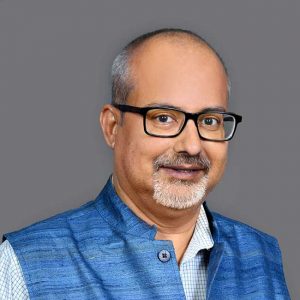
Title of the Talk: Cyber Security as National Security: The current Geo-politics and Threat Environment
Abstract
Increasing digitalization in every sphere of human lives including the economy, the attack surface in the cyber space is ever widening, consequences are ever more disastrous, and cyber risks in every system — power and energy, water supply, gas pipelines, transportation, digital governance, banking and finance etc. We have been told by reliable sources that the communications, and power systems were turned off with ease in Venezuela before a country’s military moved in extracting the president of a sovereign country by force. We have been told that the presence of a foreign adversary in the CCTV system of Iran eased the targeted bombing of their top leaders. This means, foreign adversaries are most likely sitting inside our digital assets – routers, switches, consumer devices, CCTVs, even in power system control and data acquisition systems, banking servers, and what not. India, being a country of billion plus people are dependent on other nations for its entire compute stack — semiconductor chips, boards, servers, desktops, mobiles, laptops, consumer devices, and even majority of applications such as SCADA, automotive and avionics, defense systems, and so on. That not only puts pressure on our balance of payments but also puts us at the short end of immense cyber risk. Supply chain contamination and manipulation is one such risk, supply denial is another one, and further, even our cyber security tools and technology are majority from countries such as the US, Europe, and Israel — all of that makes us even more vulnerable. More recent situation with respect to AI supply chain — hardware such as GPU/TPU and memory, and generative AI systems such as charGPT, Gemini, Claude and more — are not only making this risk of dependency, and risk of manipulation even worse, but a bigger threat of data loss in extreme large scale is happening. Indians using these tools are putting in data of their health, their scientific documents, their personal information and much more for free or cheap AI usage, and peta bytes of Indian users data are being collected by foreign entities in large scale — which will either be used to build models and sold back at high price to India as “India-specific” models, or more likely, will be used by adversaries to create targeted disinformation campaign to manipulate the minds of citizens. India, we have a problem! We need to fix this. This talk will address these threats and make some suggestions on how to tackle these issues.
Biography
Prof. Sandeep Kumar Shukla is currently a professor in the Cyber Security Center (IIITH). Prof. Shukla headed the department of Computer Science and Engineering at IIT Kanpur between 2017 and 2020 and served as the Poonam & Prabhu Goel Chair Professor from 2016 to 2019. He also acted as a joint coordinator of the National Interdisciplinary Centre for Cyber Security & Cyber Defense of Critical Infrastructures (C3i Center) at IIT Kanpur which he also founded and as a joint coordinator of the National Blockchain Project funded by the National Security Council Secretariat. He served as a project director of the C3i Hub—a Technology Innovation Hub on Cyber Security created by the DST, Government of India until March 2025. In August 2025, he moved from IIT Kanpur to IIIT Hyderabad. He worked at GTE Labs as a Principal Member of Technical Staff, as Senior Staff Design Engineer at Intel Corporation, as research faculty at the University of California, Irvine, and as a Professor of Computer Engineering at Virginia Tech, Blacksburg, USA. His major research areas are cybersecurity, cyber-resilient system design, risk assessment, critical infrastructure security, and blockchain technology. Prof. Shukla had published over 300 peer-reviewed conference papers, journal articles, and book chapters, authored 12 books, and served as editor for several noted journals and technical publications.